Brand Guidelines: What They Are and How to Create Yours
Everything you need to know about brand guidelines: definition, essential elements, and a step-by-step guide to creating your own. Real-world examples and expert tips.
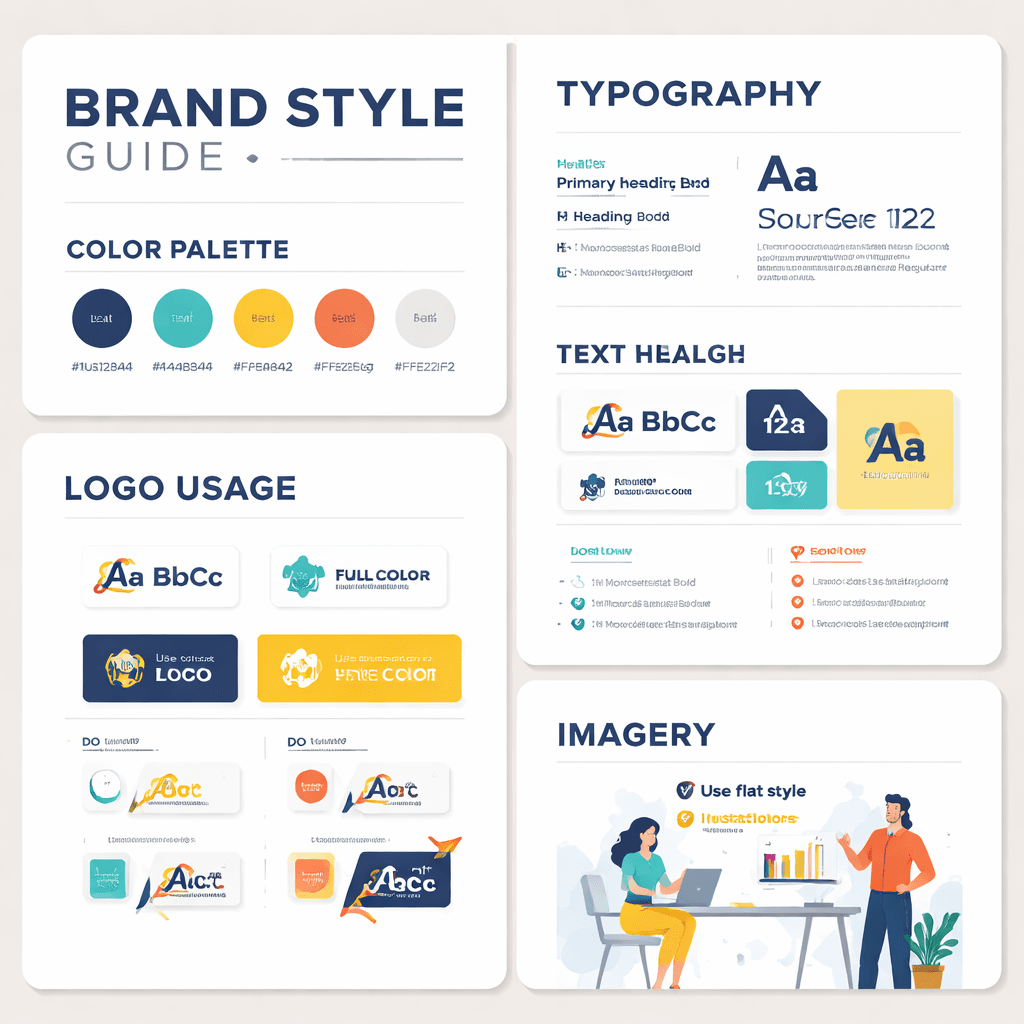
What Are Brand Guidelines?
Brand guidelines (also known as a brand style guide or brand book) are a reference document that compiles all the rules for using your visual identity. Think of it as the instruction manual for your brand.
They define precisely how to use your logo, which colors to employ, which typefaces to favor, and how to apply these elements across all your communication materials.
In other words, brand guidelines ensure that your brand is consistent and recognizable, whether on your website, social media, business cards, or packaging.
Why Your Business Needs Them
Even if you're a small business or a freelancer, brand guidelines are essential for several reasons:
- Consistency: all your visual materials speak with one voice
- Professionalism: a cohesive identity builds trust
- Efficiency: your team and contractors know exactly what to use
- Protection: you prevent misuse and distortion of your brand
- Scalability: as your team grows, the guidelines ensure continuity
Without brand guidelines, your visual identity risks becoming diluted over time, with variations in colors, fonts, and styles that blur your image.
The Essential Elements of Brand Guidelines
1. The Logo and Its Variations
This is the heart of your guidelines. They should specify:
- The primary logo and its alternative versions (horizontal, vertical, icon only)
- Clear space: the minimum space around the logo
- Minimum sizes: below which size the logo becomes illegible
- Don'ts: what should never be done with the logo (stretching, changing colors, adding effects)
To learn more about the importance of vector format for your logo, check out our vector logo guide.
2. The Color Palette
Your guidelines should define:
- Primary colors: 2-3 main brand colors
- Secondary colors: complementary colors for supporting materials
- Exact codes: HEX (web), RGB (screen), CMYK (print), Pantone (premium printing)
- Usage rules: which color for which use, approved combinations
To dive deeper, read our article How to Choose Your Logo Colors.
3. Typography
The typography section includes:
- The primary font: for headings and key elements
- The secondary font: for body text
- Hierarchy: sizes, weights (bold, regular, light), line spacing
- Web alternatives: fallback fonts if the primary one isn't available
4. Imagery and Photography Style
Define the visual style of your images and illustrations:
- Type of photography: mood, lighting, treatment (color, black and white)
- Illustration style: flat, isometric, hand-drawn
- Icon set: style, stroke weight, consistency
5. Tone and Voice (Bonus)
Some brand guidelines also include directives on communication tone: formal or casual, technical or consumer-friendly vocabulary. This is sometimes called "editorial guidelines," which complement the visual brand guidelines.
How to Create Brand Guidelines Step by Step
Step 1: Gather Your Existing Assets
Start by taking inventory of what you already have: logo (ideally in vector format), colors in use, fonts, existing materials.
Step 2: Define Your Brand Identity
Before talking about design, clarify:
- Your mission and values
- Your positioning in the market
- Your brand's personality (3-5 adjectives)
- Your target audience
Step 3: Formalize Your Visual Rules
For each element (logo, colors, typography, images), write clear, illustrated rules. Show examples of what to do AND what not to do.
Step 4: Create the Document
Your brand guidelines can take the form of a PDF (most common), a dedicated web page, or even a shared Notion/Figma workspace. The key is that it's accessible to everyone who needs it.
Step 5: Share and Enforce
Guidelines that sit in a drawer are useless. Share them with:
- Your team members
- Your contractors (agencies, freelancers, printers)
- Your partners
Common Mistakes to Avoid
- Too much detail: a 100-page guide that nobody reads. Aim for 10-20 pages for a small business.
- Not enough detail: "use blue" isn't enough. Specify exact color codes.
- Ignoring digital: your guidelines must cover web and social media.
- Never updating them: your brand evolves, and so should your guidelines.
- Forgetting the don'ts: showing what NOT to do is just as important as showing what to do.
Inspiring Brand Guidelines Examples
Several major brands publish their guidelines online:
- Spotify: an excellent example of comprehensive, accessible guidelines covering logo, colors, typography, and photography usage
- Slack: clear guidelines with plenty of "do / don't" examples
- Airbnb: guidelines that go beyond visuals by integrating brand tone
Drawing inspiration from these is a great starting point, but remember that your guidelines should be tailored to your size and needs.
FAQ
How much does it cost to create brand guidelines?
From a few hundred dollars (for basic guidelines by a freelancer) to several thousand dollars (for a complete brand book by an agency). With Wilogo, you can get a professional logo that serves as a solid foundation for your brand guidelines.
What's the difference between brand guidelines and visual identity?
Your visual identity is the collection of visual elements of your brand (logo, colors, fonts). Brand guidelines are the document that explains how to use them correctly. The visual identity is the "what," the guidelines are the "how."
Can you create brand guidelines yourself?
Yes, especially if you already have a professional logo. Tools like Canva, Figma, or even Google Docs can be enough to formalize your rules. However, a professional designer will bring an expert eye on overall consistency.
How often should you update your brand guidelines?
There's no fixed rule. Review your guidelines when you modify your logo, when you expand to a new communication channel, or every 3 to 5 years to make sure they remain relevant.
Are brand guidelines necessary for a small business?
Absolutely. Even a simplified version (logo + colors + typography + basic rules) will make a huge difference in the consistency of your communications.