How to Choose the Right Colors for Your Logo
Color psychology applied to logo design: the meaning of each color, effective combinations, and a practical method for choosing the perfect palette for your brand.
Why Your Logo Colors Matter
Colors are far from a trivial aesthetic choice. They directly influence how customers perceive your brand. According to marketing research, color increases brand recognition by 80%, and up to 90% of snap judgments about a product are based on color alone.
Think about it: Coca-Cola red, Facebook blue, Starbucks green... These colors are inseparable from their brands. They weren't chosen at random -- they're the result of strategic thinking about emotions and the messages to convey.
Color Psychology: What Science Says
Color psychology studies how hues influence our emotions, perceptions, and behaviors. While cultural associations vary from country to country, some trends are relatively universal:
- Warm colors (red, orange, yellow) stimulate and energize
- Cool colors (blue, green, purple) soothe and inspire trust
- Neutrals (black, white, gray) evoke elegance and restraint
However, keep in mind that color psychology is not an exact science. Cultural context, industry, and color combinations play a role just as important as the individual color itself.
Color-by-Color Guide
Red
Emotions: passion, energy, urgency, appetite, love
Industries: food, sports, entertainment, retail
Examples: Coca-Cola, YouTube, Netflix, Red Bull
Caution: red can also evoke danger or aggression. Use it sparingly.
Blue
Emotions: trust, reliability, calm, professionalism, security
Industries: tech, finance, healthcare, insurance, B2B
Examples: Facebook, Samsung, PayPal, IBM
Good to know: it's the most popular color among Fortune 500 companies. A safe bet, but one that may lack differentiation.
Green
Emotions: nature, health, growth, freshness, sustainability
Industries: environmental, organic, healthcare, finance, agriculture
Examples: Starbucks, Spotify, Land Rover, Whole Foods
Trend: increasingly adopted by brands wanting to communicate their environmental commitment.
Yellow
Emotions: optimism, youthfulness, warmth, creativity, attention
Industries: children's products, leisure, fast food, communications
Examples: McDonald's, IKEA, Snapchat, National Geographic
Caution: pure yellow can be hard to read on white backgrounds. Opt for amber or gold tones for better readability.
Orange
Emotions: fun, energy, friendliness, accessibility, enthusiasm
Industries: tech, e-commerce, sports, youth brands
Examples: Amazon, Fanta, Nickelodeon, SoundCloud
Advantage: orange combines the energy of red and the optimism of yellow without red's aggression.
Purple
Emotions: creativity, luxury, spirituality, mystery, innovation
Industries: beauty, tech, luxury, education
Examples: Twitch, Cadbury, FedEx (accent), Yahoo
Good to know: historically associated with royalty (the dye was rare and expensive), purple retains an aura of prestige.
Black
Emotions: elegance, sophistication, power, luxury, authority
Industries: luxury, fashion, premium tech, automotive
Examples: Chanel, Nike, Apple (variant), Adidas
Advantage: black is timeless and works in almost every context.
White
Emotions: purity, simplicity, minimalism, cleanliness
Industries: healthcare, tech, minimalist fashion
Examples: Apple (on dark backgrounds), Tesla
Usage: often used as a background color or in reverse (white logo on a colored background).
Brown
Emotions: earthiness, authenticity, ruggedness, warmth
Industries: coffee, chocolate, craftsmanship, outdoor
Examples: UPS, M&Ms, Nespresso
Pink
Emotions: softness, femininity, modernity, warmth
Industries: beauty, wellness, children's products, lifestyle
Examples: Barbie, Lyft, T-Mobile
Trend: pink is increasingly adopted by gender-neutral brands, driven by the "blush" and "millennial pink" trends.
How Many Colors Should You Use?
The golden rule: 2 to 3 colors maximum for your logo.
- 1 color: strong impact, easy to remember (Nike, Apple, Chanel)
- 2 colors: the most common choice, creates contrast (FedEx, Pepsi)
- 3 colors: more complex but richer (Burger King, Mastercard)
- 4+ colors: reserved for well-established brands wanting to convey diversity (Google, NBC)
Beyond 3 colors, the logo becomes harder to reproduce and remember. For a young brand, chromatic restraint is almost always the best choice.
Color Combinations That Work
Here are the main combination methods:
Complementary Colors
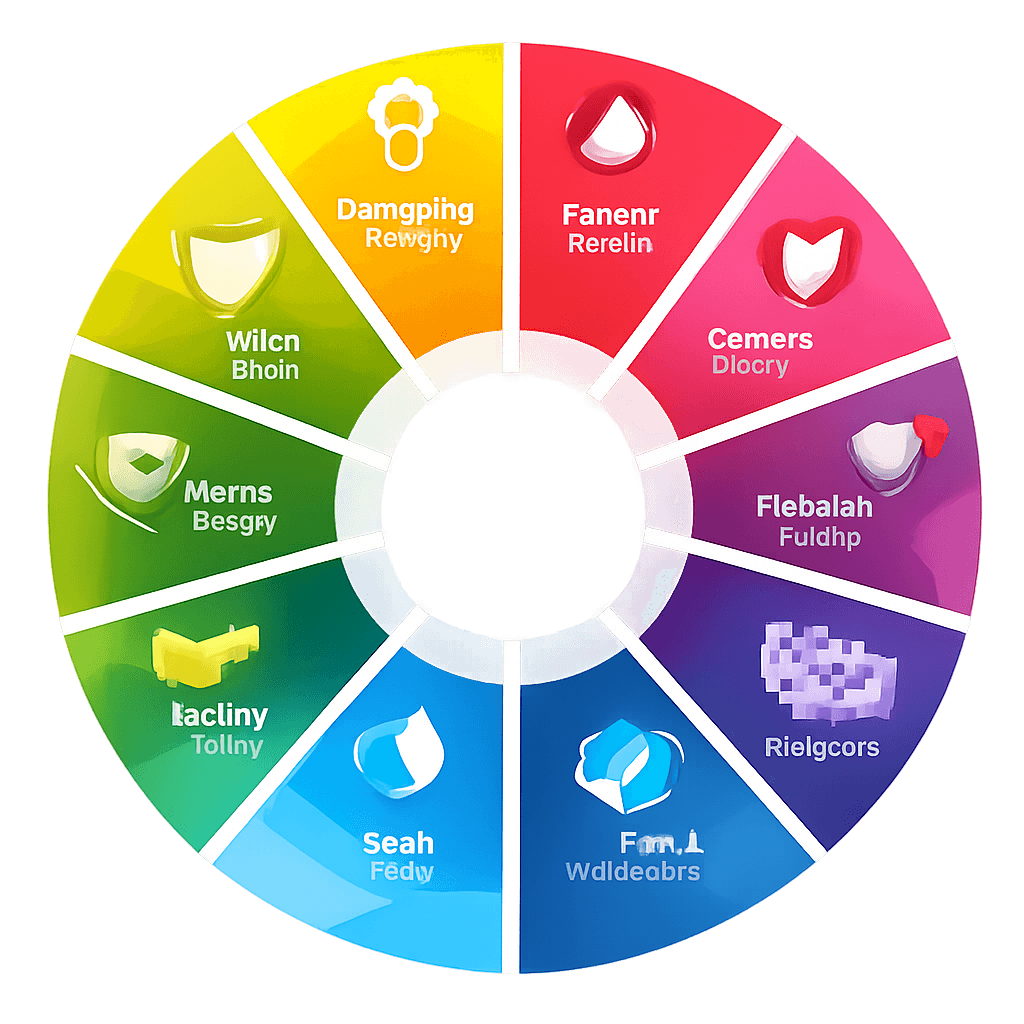
Colors opposite each other on the color wheel (blue/orange, red/green). They create strong, dynamic contrast.
Analogous Colors
Colors adjacent on the color wheel (blue/purple, orange/red). They create a soft, cohesive harmony.
Color + Neutral
A bold color paired with black, white, or gray. This is the safest and most readable combination.
Monochromatic
Different shades of the same color. Elegant and sophisticated, ideal for premium brands.
5-Step Method to Choose Your Colors
- Define your values: what emotions should your brand convey? List 3-5 adjectives.
- Analyze your industry: which colors dominate among your competitors? Do you want to conform or stand out?
- Identify your target audience: color expectations vary by age, gender, and cultural background.
- Test combinations: use tools like Coolors, Adobe Color, or Palette Generator to explore harmonies.
- Validate across all media: make sure your colors work in print (CMYK), on screen (RGB), and in both large and small formats.
Mistakes to Avoid
- Choosing based on personal taste: your favorite color isn't necessarily the right one for your brand
- Ignoring industry norms: a law firm in neon pink will raise eyebrows (and not always in a good way)
- Forgetting accessibility: make sure your logo is readable for colorblind individuals (8% of the male population)
- Neglecting black and white: your logo must also work without color (fax, engraving, stamps)
- Too many colors: beyond 3, readability and memorability drop
FAQ
What is the best color for a logo?
There is no universally "best color." Blue is the most common in business, but the right color depends on your industry, values, and target audience. A red logo might be perfect for a restaurant and inappropriate for a medical practice.
Can you change your logo colors?
Yes, but with caution. A color change profoundly alters how your brand is perceived. It should be accompanied by strategic thinking and a gradual transition to avoid losing brand recognition.
Do colors mean the same thing worldwide?
No. White symbolizes purity in Western cultures but mourning in some Asian cultures. Red means good luck in China but can evoke danger in Europe. If your brand is international, take these cultural differences into account.
How can I check that my colors are accessible?
Use free tools like WebAIM Contrast Checker or Stark to verify contrast ratios. Also test with colorblindness simulators like Coblis.
Should I use the same colors for my logo and my website?
Your logo and website should share the same color palette to ensure brand consistency. That's exactly the role of brand guidelines.