How to Create a Logo for Your Business: A Complete Guide
A complete step-by-step guide to creating your business logo: brief, research, design, color selection, typography, and finalization.
Why your logo is the cornerstone of your identity
Your logo is much more than a simple drawing. It's the face of your business, the first element that customers, partners, and prospects remember. A successful logo:
- Inspires trust and credibility
- Differentiates you from the competition
- Communicates your values and positioning
- Creates an emotional connection with your audience
According to multiple marketing studies, 75% of consumers recognize a brand by its logo. That's how important it is to get this foundational step right.
Step 1: Define your creative brief
Before touching a pencil or any tool, ask yourself the right questions:
- What is your mission? What do you do and why?
- Who is your target audience? What does your ideal customer look like?
- What are your values? Innovation, tradition, accessibility, luxury?
- Who are your competitors? How are their logos positioned?
- What adjectives describe your brand? Modern, warm, technical, playful?
This brief will be your compass throughout the creation process. Don't skip it — it's the difference between a thoughtful logo and a random one.
Step 2: Research and find inspiration
Before creating, observe. Analyze logos in your industry, identify recurring visual codes, and spot what works (and what doesn't).
Where to find inspiration:
- Dribbble and Behance: professional designer portfolios
- Pinterest: create a dedicated mood board
- LogoLounge: logo database organized by trend
- Your surroundings: packaging, signage, apps...
Inspiration doesn't mean copying. The goal is to fuel your thinking to create something original.
Step 3: Choose the type of logo
There are several logo families, each with its own strengths:
- Wordmark (logotype): the name alone in a distinctive typeface (Google, Coca-Cola)
- Monogram: the brand's initials (IBM, HBO, LV)
- Symbol (pictorial mark): a recognizable icon (Apple, Nike, Twitter)
- Combination mark: text + symbol (Adidas, Lacoste, Burger King)
- Emblem: text integrated into a symbol (Starbucks, Harley-Davidson)
- Mascot: a character that embodies the brand (Michelin, KFC)
For a new business, the combination mark is often the most strategic choice: it pairs the recognition of a symbol with the readability of a name.
Step 4: Select your colors
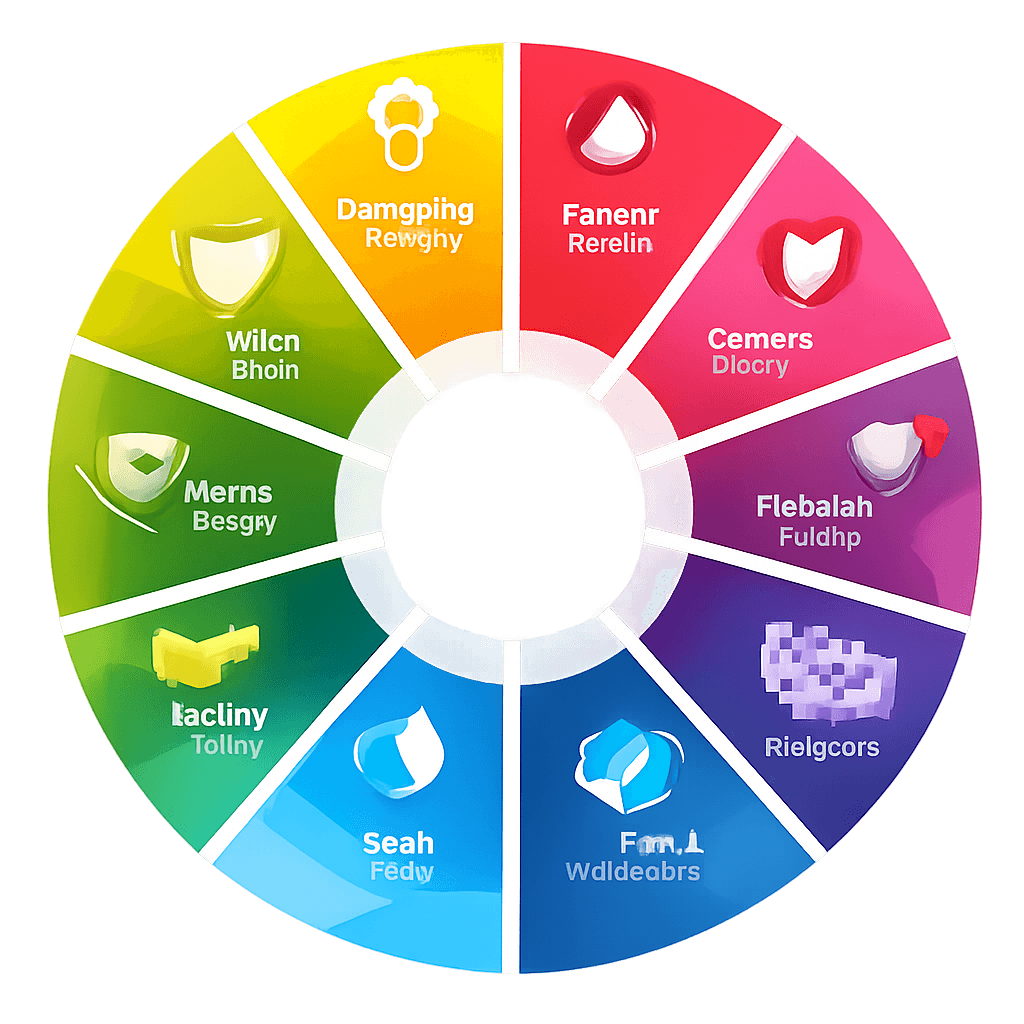
Colors aren't just aesthetic — they convey emotions and messages. Here are the most common associations:
- Blue: trust, reliability, professionalism (banking, tech)
- Red: energy, passion, urgency (food, sports)
- Green: nature, health, growth (organic, environment)
- Yellow/Orange: optimism, creativity, youthfulness
- Black: elegance, luxury, sophistication
- Purple: creativity, spirituality, innovation
Stick to 2-3 colors maximum to keep your logo readable and cohesive. For a deeper dive, check out our article How to choose your logo colors.
Step 5: Choose your typography
Typography is a strategic choice that's often underestimated:
- Serif: tradition, reliability, elegance (Times New Roman, Garamond)
- Sans-serif: modernity, simplicity, accessibility (Helvetica, Inter)
- Script/Handwritten: creativity, personality, craftsmanship
- Display: impact, originality, strong character
The ideal approach is to choose a font that complements your symbol without competing with it. If your icon is complex, go for a simple typeface, and vice versa.
Step 6: Design and iterate
This is the actual creative step. Whether you're designing yourself or working with a professional:
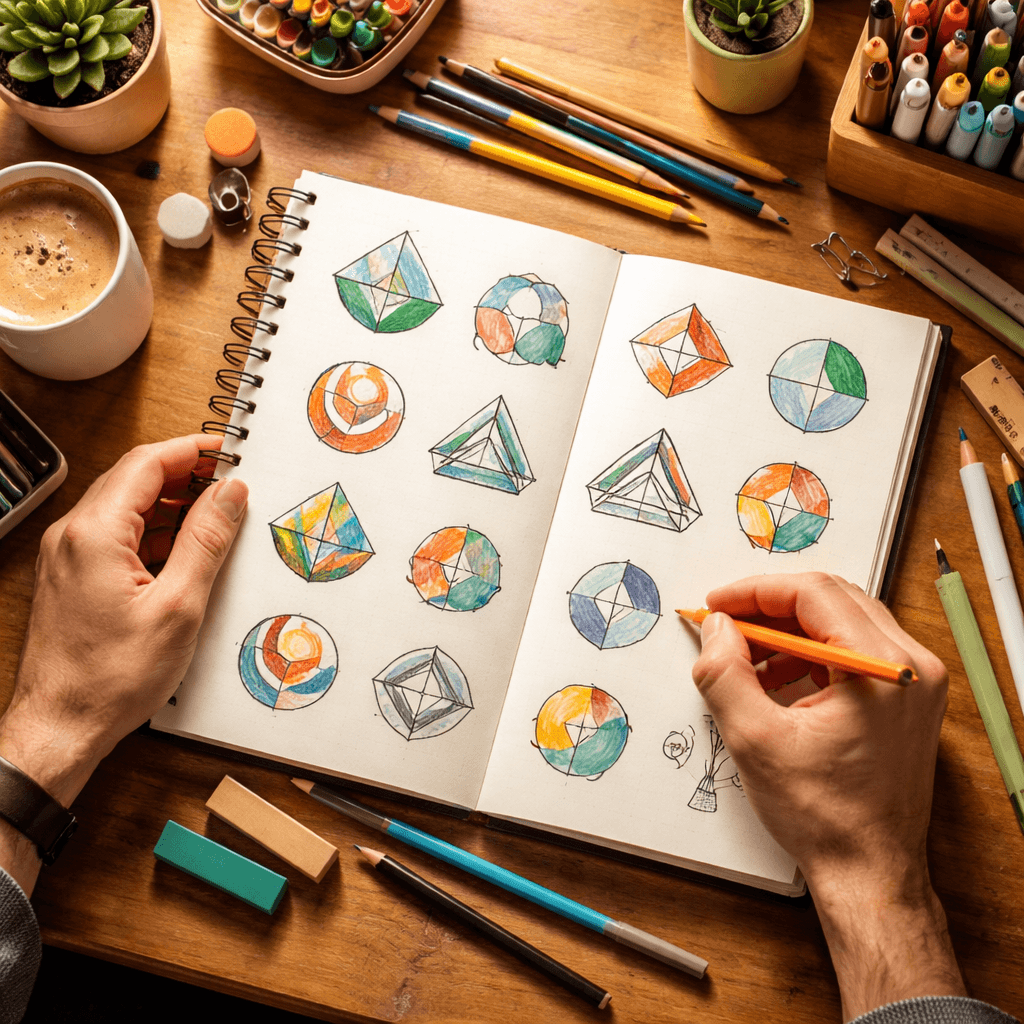
- Sketch: start with quick pencil sketches on paper. Don't censor anything.
- Digitize: bring the best ideas into vector software (Illustrator, Figma, Inkscape).
- Iterate: test different variations of colors, proportions, and layouts.
- Test: show your proposals to people outside your team for feedback.
Don't hesitate to explore multiple creative directions before settling. A good logo design process typically involves 3 to 5 different concepts.
Step 7: Finalize and create variations
Once the design is approved, prepare your final files:
- SVG / AI: essential vector format (see our guide on vector logos)
- PNG: with transparent background, in multiple sizes
- PDF: for professional printing
- Favicon: miniature version for the web
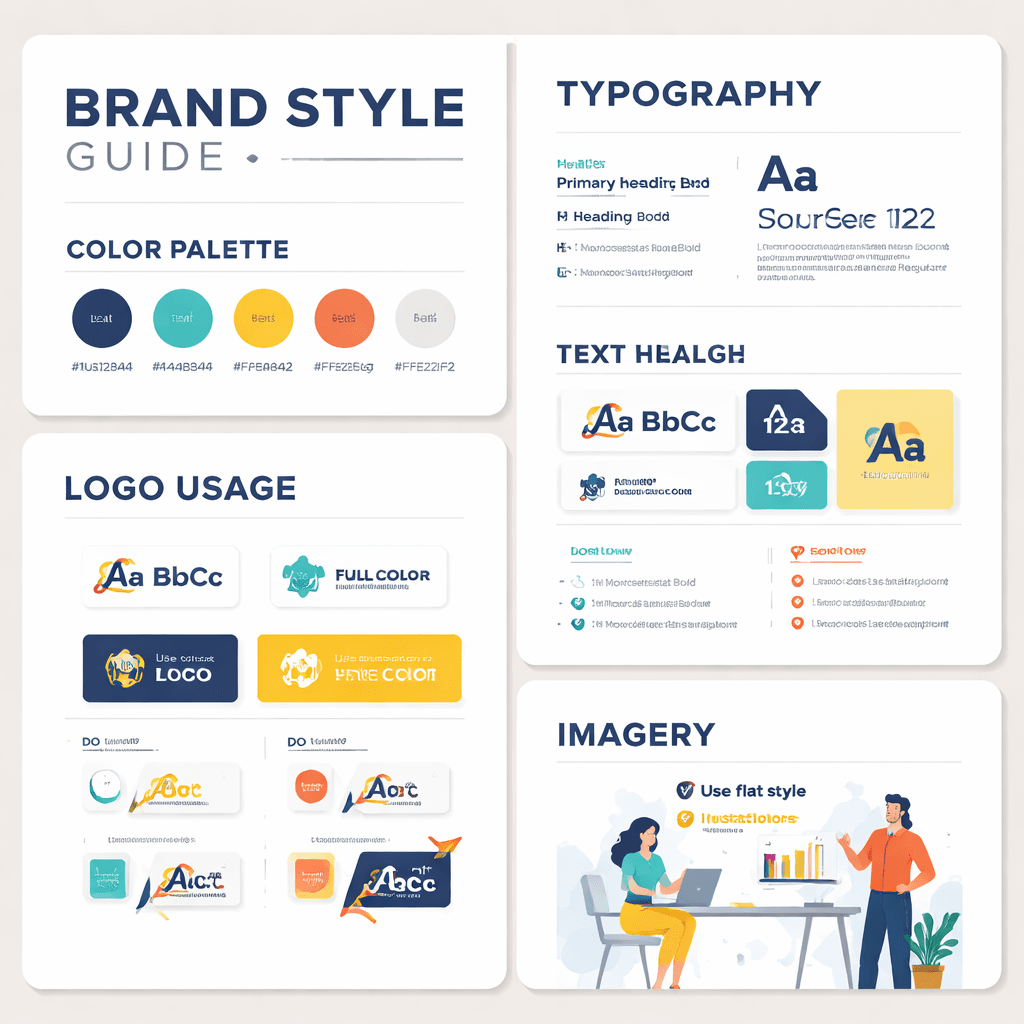
Also prepare variations: horizontal, vertical, monochrome, on dark background, on light background. These variations will form the foundation of your brand guidelines.
Mistakes to avoid
- Too much detail: an overloaded logo becomes unreadable at small sizes
- Blindly following trends: aim for timelessness rather than the latest fad
- Copying a competitor: you risk confusion and even legal action
- Ignoring vector format: a JPG logo will be unusable for printing
- Not testing across formats: check readability everywhere
- Changing your logo too often: consistency over time builds recognition
What budget to plan for?
The cost of a logo varies considerably:
- Free online tools: $0 (but generic results, see our comparison of free tools)
- Contest platforms like Wilogo: starting from a few hundred dollars for a professional, unique logo
- Freelance designer: $500 to $3,000 on average
- Branding agency: $3,000 to $20,000 and up
The right investment depends on the size of your project and your ambitions. For a small business, a platform like Wilogo offers excellent value by letting you receive multiple proposals from professional designers.
FAQ
How long does it take to create a business logo?
On average, expect 2 to 4 weeks for a full professional project (brief, creation, iterations, finalization). With an online tool, you can get a first result in a few hours, but the outcome will be less polished.
Should I trademark my logo?
It's not mandatory but strongly recommended if your logo is a key element of your commercial identity. Filing a trademark protects your logo for 10 years (renewable).
Can I create my own logo if I'm not a designer?
Yes, thanks to modern online tools. However, a professional designer will bring expertise in composition, typography, and brand strategy that automated tools simply can't match.
What makes a good logo?
A good logo is simple, memorable, timeless, versatile, and relevant. It works large and small, in color and black-and-white, across all formats.
How do I know if my logo is successful?
Test it: is it recognizable in 2 seconds? Does it work as a thumbnail? Do your target customers understand it? If yes, you're on the right track.